· 1 min read
Three ways to make matcha
There are three common ways to make matcha: usucha, whisked with water until light and foamy; koicha, kneaded slowly with less water into a thick, glossy tea; and a latte, a smooth matcha shot poured over milk.
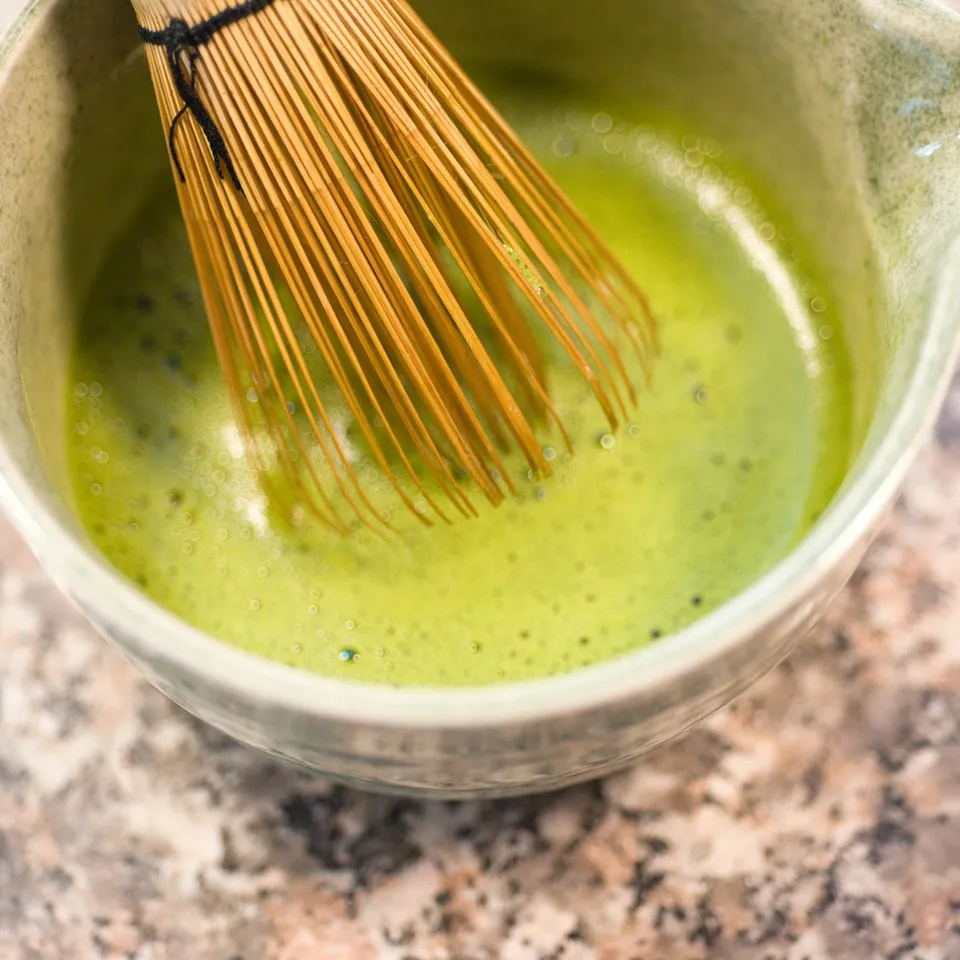
The same tin can become a light bowl, a thick tea, or a milk drink. The amount of water and the way you mix it make much of the difference.
Usucha: light and foamy
Usucha means “thin tea”. Whisk matcha with water until it is smooth and lightly foamed. There is enough water to let the tea feel open and easy to sip. It is a useful starting point when you want to notice a new tin on its own.
A starting point: 2 g of matcha, 70 ml of water at about 80 °C, whisked for about 20 seconds. See the usucha recipe.
Koicha: thick and smooth
Koicha means “thick tea”. It uses more matcha and less water than usucha. Work it slowly into a glossy, even tea rather than whisking in air. The texture is dense, and the tea’s character comes through strongly, so small differences between tins are easier to notice.
A starting point: 4 g of matcha, 40 ml of water at about 75 °C, kneaded for about 40 seconds. See the koicha recipe.
Latte: matcha with milk
First whisk the matcha with a little water to make a smooth shot, then add milk. Milk changes both the texture and how strongly the tea comes through. A latte is a modern way to enjoy matcha; you can adjust the milk until the balance suits this tin.
A starting point: 3 g of matcha, 60 ml of water at about 80 °C, poured over 180 ml of milk. See the matcha latte recipe.
Try one tin two ways
Try one tin as usucha and as a latte. Notice which flavours remain clear and which become softer.
Questions
- What is the difference between usucha and koicha?
- Usucha (thin tea) uses about 2 g of matcha with 70 ml of water, whisked until foamy. Koicha (thick tea) uses about 4 g with 40 ml, kneaded slowly into a glossy paste without foam.
- Which way of making matcha should I try first?
- Usucha is a useful starting point with a new tin, because there's enough water to notice the matcha on its own. Then try the same tin as a latte and compare.
Your matcha companion
Tama keeps your tins, recipes, brewing history and tasting notes together on iPhone and iPad.